
Always watching over.
Never watching.
Know your loved one is safe — even at 3 a.m., even when you can't be there. NeuraSense is a wall-mounted radar sensor that catches a fall the moment it happens and watches over breathing, sleep, and daily activity — contactlessly and completely privately. No wearables. No cameras. Nothing for them to remember.
Set up in minutes · insights from the first night · no-risk early access
Sources: Alzheimer's Association, 2024 Alzheimer's Disease Facts and Figures; CDC.
The tools meant to help often
get in the way.
Families caring for a loved one with dementia are forced to choose between intrusive technology and not knowing. The two most common options each break down exactly when they're needed most.
Forgotten, refused, uncharged.
Pendants and watches only work when worn. People with dementia frequently remove, lose, or resist them — and a device on the nightstand protects no one.
A camera in the bedroom.
Video monitoring captures everything — and patients, families, and regulators are rightly uncomfortable with cameras in private spaces like bathrooms and bedrooms.
You can't be there 24/7.
Caregivers can't watch around the clock. A fall at 3 a.m., a skipped night of sleep, or a slow change in gait can go unnoticed for hours — or weeks.
One sensor. Total awareness.
Zero intrusion.
NeuraSense uses millimeter-wave radar to understand what's happening in a room without ever capturing an image. It sees motion, breathing, and falls as signals — never as pictures.
| Capability | NeuraSense | Wearables | Cameras |
|---|---|---|---|
| Works with zero effort from the patient | Yes | No | Yes |
| Protects privacy — no images recorded | Yes | Yes | No |
| Automatic 24/7 fall detection | Yes | Partial — SOS button only | Partial |
| Contactless vital signs (heart & breathing) | Yes | Partial | No |
| Activity & gait trends over time | Yes | Partial | No |
| Nothing to wear, charge, or remember | Yes | No | Yes |
From a quiet sensor on the wall
to peace of mind on your phone.
It's live the day it arrives. Most homes are set up in under ten minutes — then NeuraSense works silently, around the clock, from the very first night.
Mount in minutes
Place a discreet sensor on the wall in each key room — bedroom, bathroom, living area. No tools, nothing to wear. It plugs in once and runs silently.
Sense
Millimeter-wave radar maps motion as a privacy-safe point cloud — range, velocity, and angle — never a picture or recording.
Understand
On-device AI recognizes falls, gait changes, activity patterns, sleep, and nighttime vital signs — engineered for clinical-grade precision and now being validated independently.
Act in seconds
Caregivers receive an alert within seconds of a fall — and, from the very first night, clear daily, weekly, and monthly reports.
Quiet protection,
right where they rest.
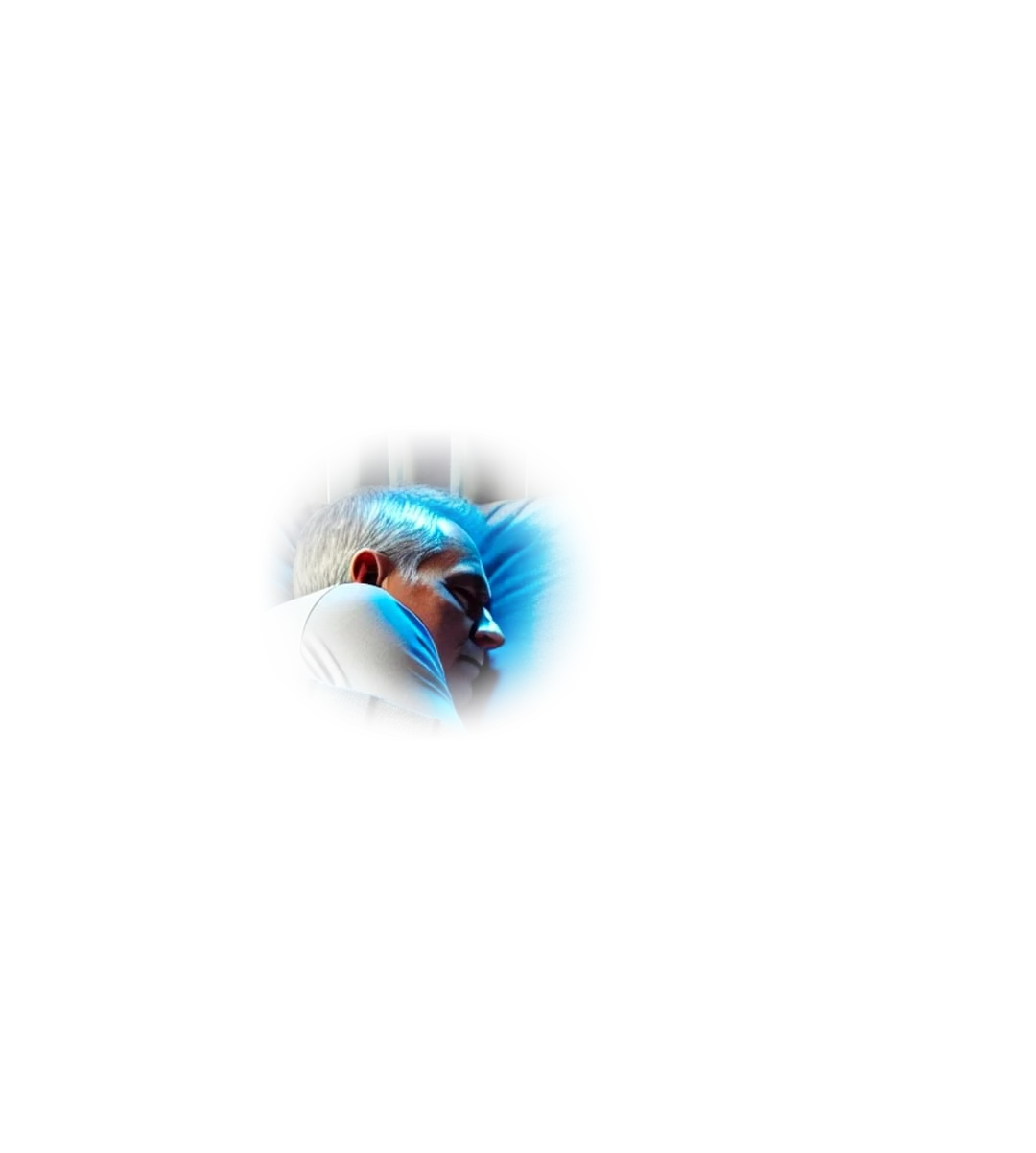
At night, NeuraSense watches over breathing, heart rate, restlessness, and falls — from a small sensor on the wall. No camera points at the bed, and nothing touches their skin. They simply sleep, while you stay informed.
- Contactless heart & breathing rate during sleep
- Instant alerts for a fall or for leaving the bed
- A clear sleep & vitals summary by morning

Everything a caregiver wishes
they could see — without being there.
Fall detection
Instant, automatic alerts for forward, backward, and sideways falls — across every covered room, day or night.
Bed-exit & wandering
Knows when a loved one gets out of bed overnight or moves toward a door — the moments that matter most in dementia care — so help can reach them before they're lost or hurt.
Contactless vital signs
Measures heart rate and respiration during sleep by sensing subtle chest motion — no chest strap, no skin contact.
Activity & gait
Tracks walking, sitting, and movement throughout the home, surfacing subtle gait changes that signal decline.
Sleep stages & restlessness
Breaks the night into restful and restless stretches — surfacing tossing, frequent waking, and nighttime agitation that often precede a hard day.
Smart alerts
Real-time notifications for meaningful events — leaving home, staying immobile too long, or unusual nighttime activity.
Care-circle alerts
Alerts reach everyone who matters — adult children, in-home caregivers, and on-call staff — not just one phone, so no single missed call leaves them unseen.
Caregiver reports
Clear daily, weekly, and monthly summaries of activity, sleep, and vitals — so families and clinicians can act on trends.
Privacy by design
No cameras. No microphones. No images. NeuraSense processes radar signals, never personal recordings.
Whole-home coverage
Multiple sensors work together across rooms for seamless, edge-to-edge coverage of the entire living space.
When a fall happens, everyone
who matters knows — in seconds.
NeuraSense quietly follows the rhythm of daily life across every room. It alerts caregivers the instant it detects a fall — or an unusual pattern, like a long bathroom visit — and turns each day into a clear activity report. No button to press, nothing to wear.
Illustration Scroll through a day in the home — NeuraSense tracks activity, catches a fall, and alerts family in seconds. No camera, no wearables.
Is a loved one at risk at night?
Get The 3 a.m. Checklist — 7 quiet warning signs that someone living with dementia may be unsafe overnight, and what to do about each. Free, no strings.
No spam. We'll only email you about NeuraSense, and you can opt out anytime.
Radar intelligence,
engineered for the home.
NeuraSense pairs advanced millimeter-wave radar with machine-learning models trained to read human movement — turning invisible signals into reliable, actionable insight.
5D sensing
Captures range, velocity, azimuth and elevation angle, and signal power for a rich, spatial view of motion.
Super-resolution angle estimation
Pinpoints a person's location precisely, even in cluttered, furnished real-world rooms.
Ground-clutter filtering
Suppresses reflections from walls and furniture so the system focuses only on the person.
Deep-learning activity & fall models
Neural networks classify falls, postures, and activities — engineered for high accuracy and few false alarms (see targets below).
To NeuraSense, this scene is only signals — never an image. The sensor on the wall reads motion and breathing as radar data — no camera ever captures what you just watched.
Built for everyone who
carries the weight of care.
Families & home care
Keep a parent safely independent at home, and finally sleep through the night knowing you'll be alerted if something's wrong.
Assisted living & memory care
Catch falls in the minutes between rounds, cut response times, and walk into every family meeting and state survey with objective proof of care.
Explore the facility program →Clinicians & researchers
Capture continuous, real-world behavioral and physiological data to track progression and measure the impact of interventions.
Big claims deserve real proof.
NeuraSense is an investigational system in active development — so we don't ask for blind faith. We reverse the risk, show our work, and stay honest about what the technology can and can't do today.
No-risk early access
Join the pilot risk-free. If NeuraSense doesn't earn its place watching over the person you care for, you pay nothing and owe nothing. Keep it only if it genuinely helps.
No black box, no images
We show exactly how it works: radar signals in, clear alerts out. No camera and no microphone are ever present — privacy isn't a setting, it's the design.
Grounded in published science
Built on the same peer-reviewed millimeter-wave sensing and machine-learning methods used across modern radar research — not marketing buzzwords.
Honest by default
We publish our performance targets and our limits, label the system investigational, and never overpromise. Every figure we show is a research target, plainly marked as one.
The NeuraSense Early-Access Promise
Try it risk-free during your pilot. If NeuraSense doesn't earn its place keeping watch over the person you care for, you pay nothing and owe nothing — we'll even help you take it down. We only want NeuraSense in homes and facilities where it genuinely helps.
Built on published science — and being validated independently.
Independent academic validation
A clinical validation program designed with a leading university human-performance research center — under independent IRB oversight, with real participant recruitment and ground-truth benchmarking.
Clinical guidance
Advised by an Alzheimer's-disease neuropsychology expert at a top U.S. teaching hospital, so our outputs map to recognized AD/ADRD measures.
Benchmarked, not hand-waved
Measured against commercial reference devices and ground-truth data — not marketing claims. Every performance figure we publish is a research target, plainly marked as one.
Three simple steps to peace of mind.
Reach out
Tell us a little about your situation. It takes two minutes, and there's no obligation.
Get a custom plan
A 20-minute walkthrough, online or in person, with a coverage plan tailored to the home or facility.
Start risk-free
Join early access under our no-risk promise — keep NeuraSense only if it earns its place.
Join The Founding 100
Be one of the first 100 families to bring NeuraSense home — and lock founding perks that won't exist after launch.
⏳ Founding enrollment closes August 31, 2026
- Front of the line. Founding members receive the first units off the line.
- Founding price locked for life. Your rate never rises — the public launch price will be higher.
- A free second sensor for whole-home coverage.
- White-glove setup and a personal onboarding call.
- The no-risk Early-Access Promise — keep NeuraSense only if it earns its place.
- A direct line to the team to help shape the product.
A fully refundable deposit holds your founding spot and locks your price. Change your mind any time before you decide to keep the system and we refund every cent.
Prefer to see it first? Request a demo →
See it for your situation first.
Book a 20-minute walkthrough, online or in person, and we'll show you exactly how privacy-first radar monitoring would work for your home or facility — no obligation.
- A 20-minute walkthrough, online or in person
- A personalized room, coverage, and setup plan
- Honest answers — no pressure, no obligation
Request a demo
We'll get back to you within one business day.
Common questions
Does it actually work — and is it proven?
NeuraSense is an investigational system in active development, built by radar and AI engineers whose systems run in millions of vehicles. Its accuracy is being validated independently with a university human-performance research center under IRB oversight. And because early access comes with our no-risk promise, you don't carry that risk — you keep NeuraSense only if it earns its place.
Does NeuraSense use a camera?
No. NeuraSense uses millimeter-wave radar, which senses motion and breathing as signal data — not video. There is no camera and no microphone, and no images or audio are ever recorded.
Does the person being monitored have to wear or do anything?
Nothing at all. The sensor mounts on the wall and works passively. There's nothing to wear, charge, press, or remember — which is exactly why it works for people living with dementia.
What will it cost?
We'll share early-access pricing during your walkthrough, once we understand the home or facility and the coverage you need. Founding participants lock in preferential pricing — and the no-risk promise means you only pay to keep a system that's working for you.
What happens after I request a demo?
We reply within one business day to schedule a 20-minute walkthrough. From there you get a tailored coverage plan, and if it's a fit, you can start risk-free as a founding participant — no obligation.
Is NeuraSense available today?
We're onboarding a limited early-access cohort now. Request a demo to see whether your home or facility is a fit for the current round.
Building the future of dementia care.
We're a team of senior radar and AI engineers bringing privacy-first monitoring to market, with independent academic clinical validation underway. If you invest in or partner with health-tech, we'd value a conversation.
Get in touchSources: Alzheimer's Association, 2024 Facts and Figures; CDC.